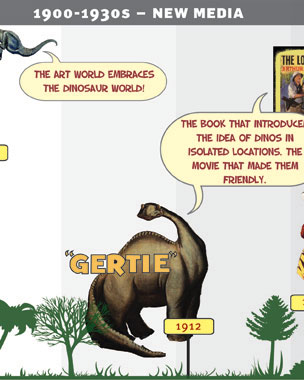
The paintings of Charles R. Knight were the first influential representations of dinosaur studies being carried out in N.America . Knight worked extensively with the American Museum of Natural History and its director, Henry Fairfield Osborn, who wanted to use dinosaurs and other prehistoric animals to promote his museum and his ideas on evolution.
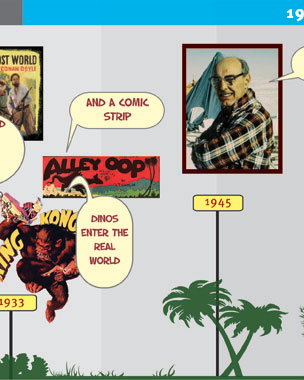
The stop-motion techniques of Willis O'Brien went on to bring dinosaurs to life in the 1933 film King Kong, which merged the tropes of dinosaur combat and dinosaurs in a lost world.
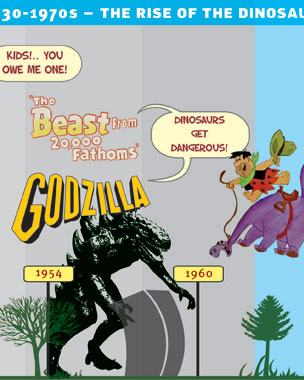
Dinosaurs gained a home in television in the 1960s animated sitcomThe Flintstones, in another example of dinosaurs shown as coexisting with humans (for comedic effect in this case).
Ned Colbert’s The Dinosaur Book (1945) was the first book that combined scientific accuracy with non technical presentation , and its status as the only such book for many years made Colbert an important figure for the coming generations of paleontologists and dinosaur enthusiasts.
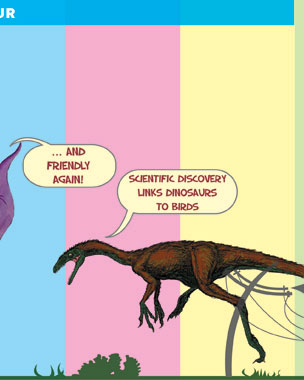
Reappraisal of dinosaur physiology suggested that they weren’t the sluggish cold-blooded animals they’d long been assumed to be,and a recognition that dinosaurs formed a natural group.