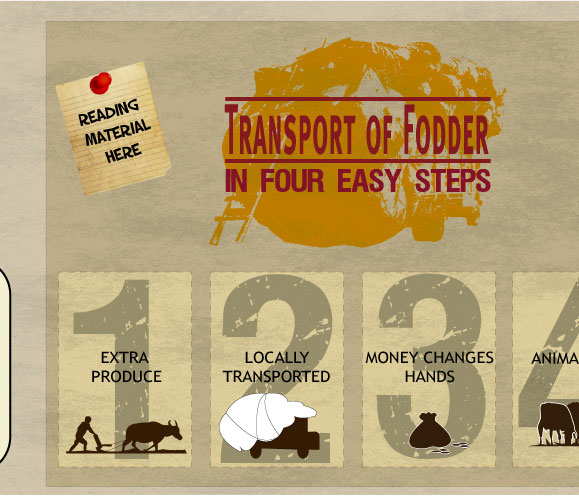
A farmer usually generated fodder from his own fields earlier. Whatever crop he sowed in his fields, the residue of that, like straws and husk (anything that human being could not eat), would go towards feeding the animal which gave milk and provided dung for fertilizer in the fields. This was aided by letting the livestock go loose in village common land or gauchar where the animal got sufficient green fodder while the leftover pellets after pressing oil out of mustard or other oil seeds were also reserved for animals. People who have less animals still do the same if they have enough land. Otherwise, fodder is sourced from outside. For instance, a farmer in Punjab who does not have any use for the large quantity of wheat fodder after he has harvested his field, sells it to local transporters who ferry it to other states where there is less fodder and more animals.In the area of fodder deficit, a wholesaler buys fodder in tons and further transports them in nearby villages. Fodder is hardly transported to far-off regions because of its high volume which makes it less profitable when compared with the cost of fuel etc.
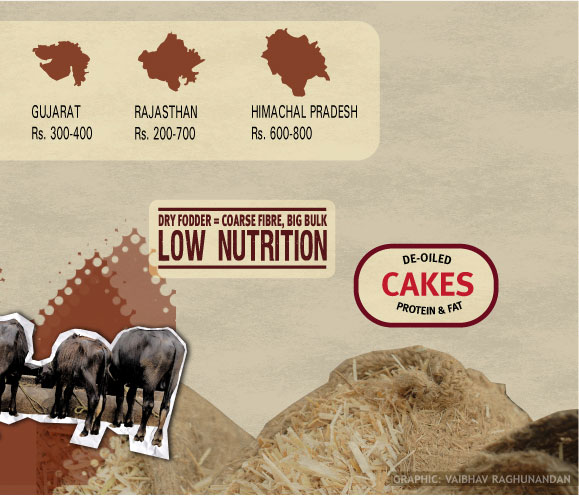
Dry or coarse fodder provides provides coarse fiber, big bulk but low nutrition value. It can promote rumination and wriggling of stomach and digestion functions.
Concentrates like de-oiled cakes provide fat and protein and those like molasses provide carbohydrates to the animals. Lack of green fodder meands reduction in milk quantity and if a cow does not get concentrates, it affects the quality of milk in terms of less fat.
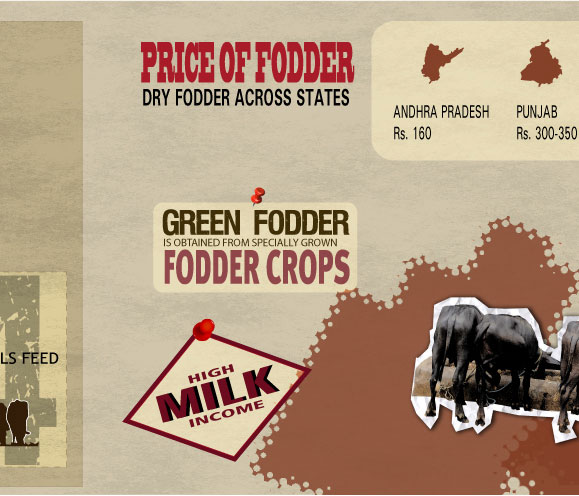
Green Fodder is obtained from specially grown Fodder crops:
Green Fodder, which can be grass (alfalfa or any other), Barseem, etc or feed obtained from specially grown fodder crops. This is a source of vitamin, little thick fiber and aids digestion.